


Description
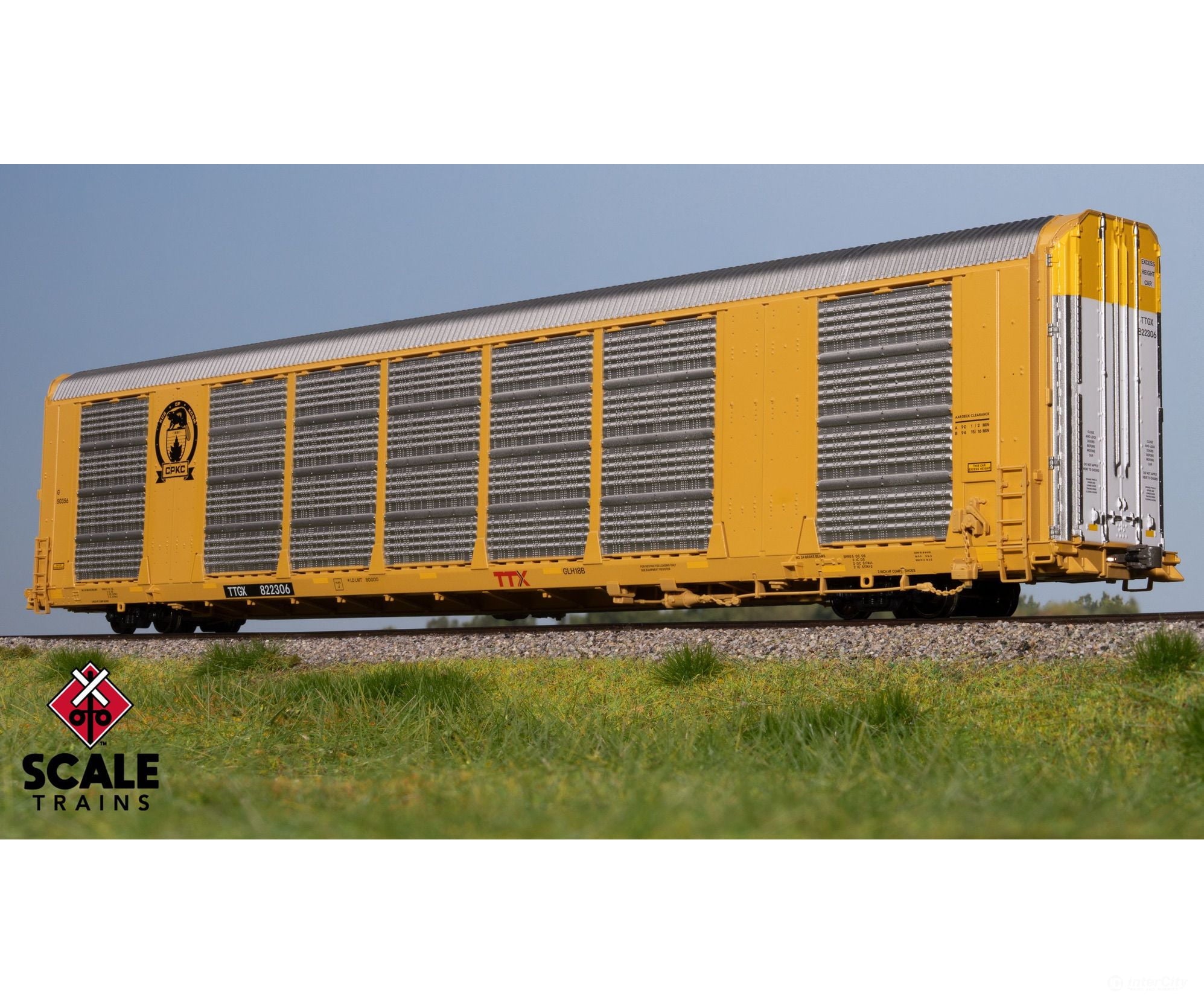
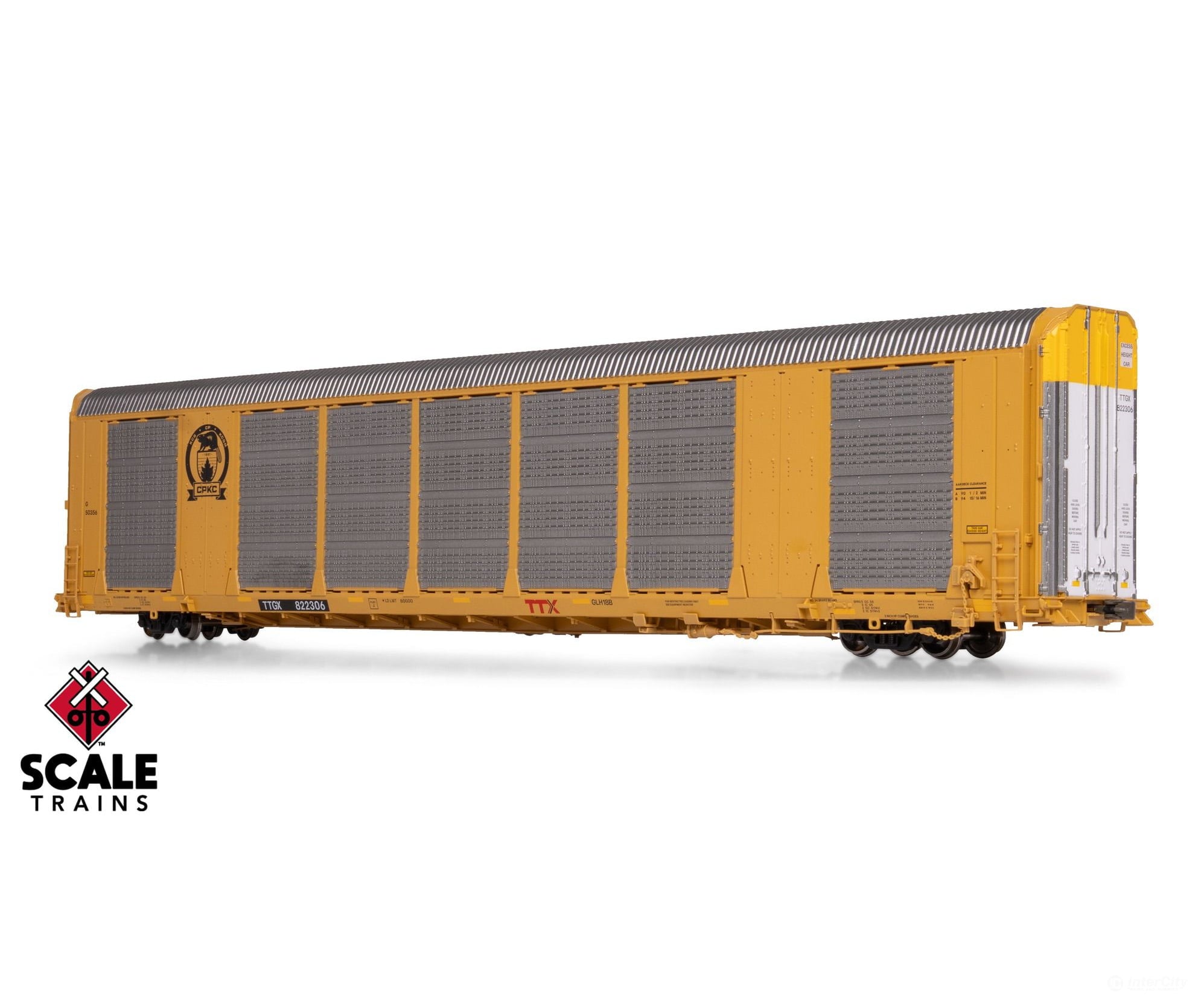
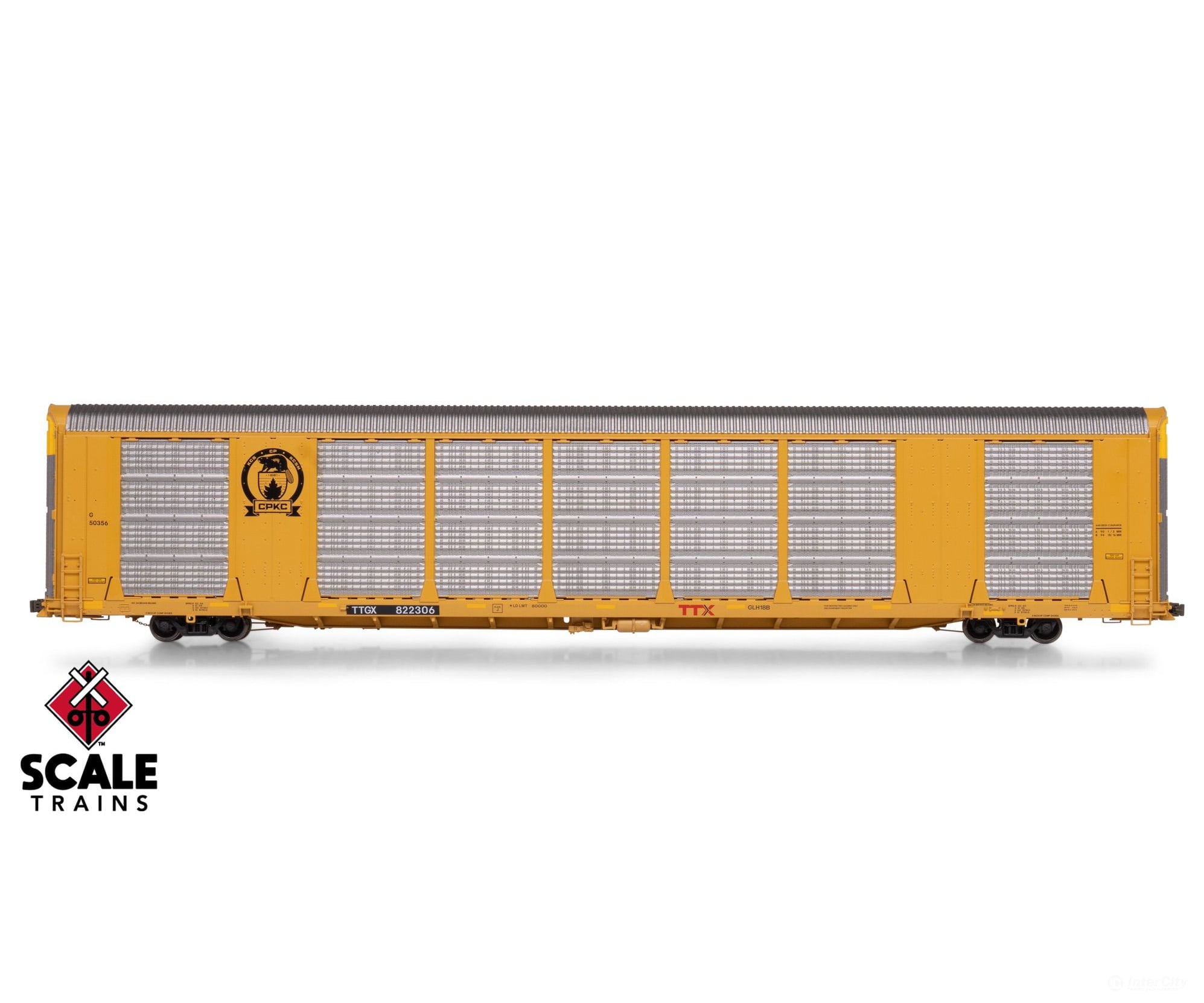
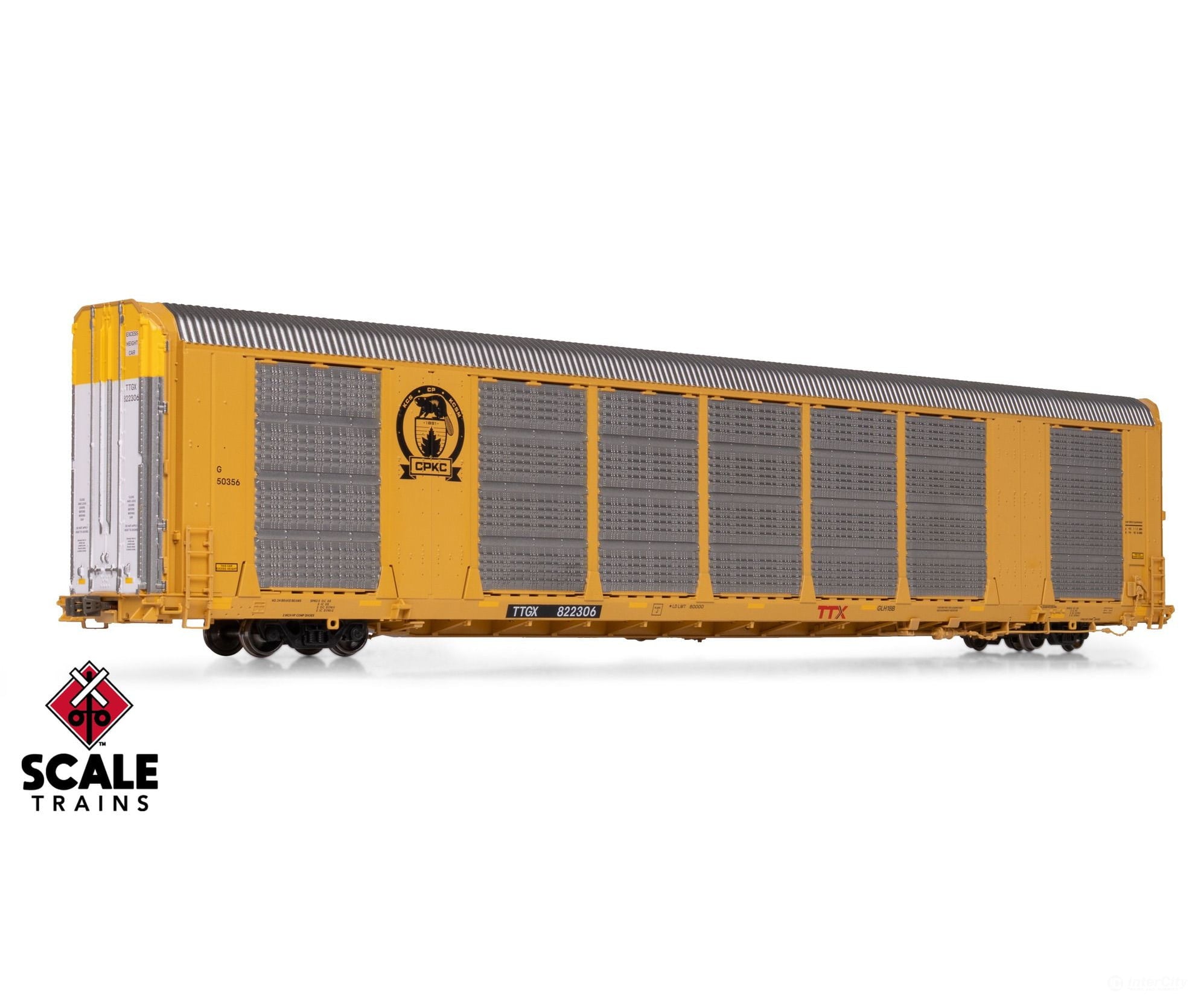
Gunderson's Multi-Max™ Autorack design, introduced in 2013, offers enhanced protection with fewer perforations to guard against graffiti and features adjustable decks for bi- and tri-level configurations, adapting to shifting traffic patterns. This design has become highly popular, with thousands built for Class I railroads, and stands out with its colorful schemes and large logos.
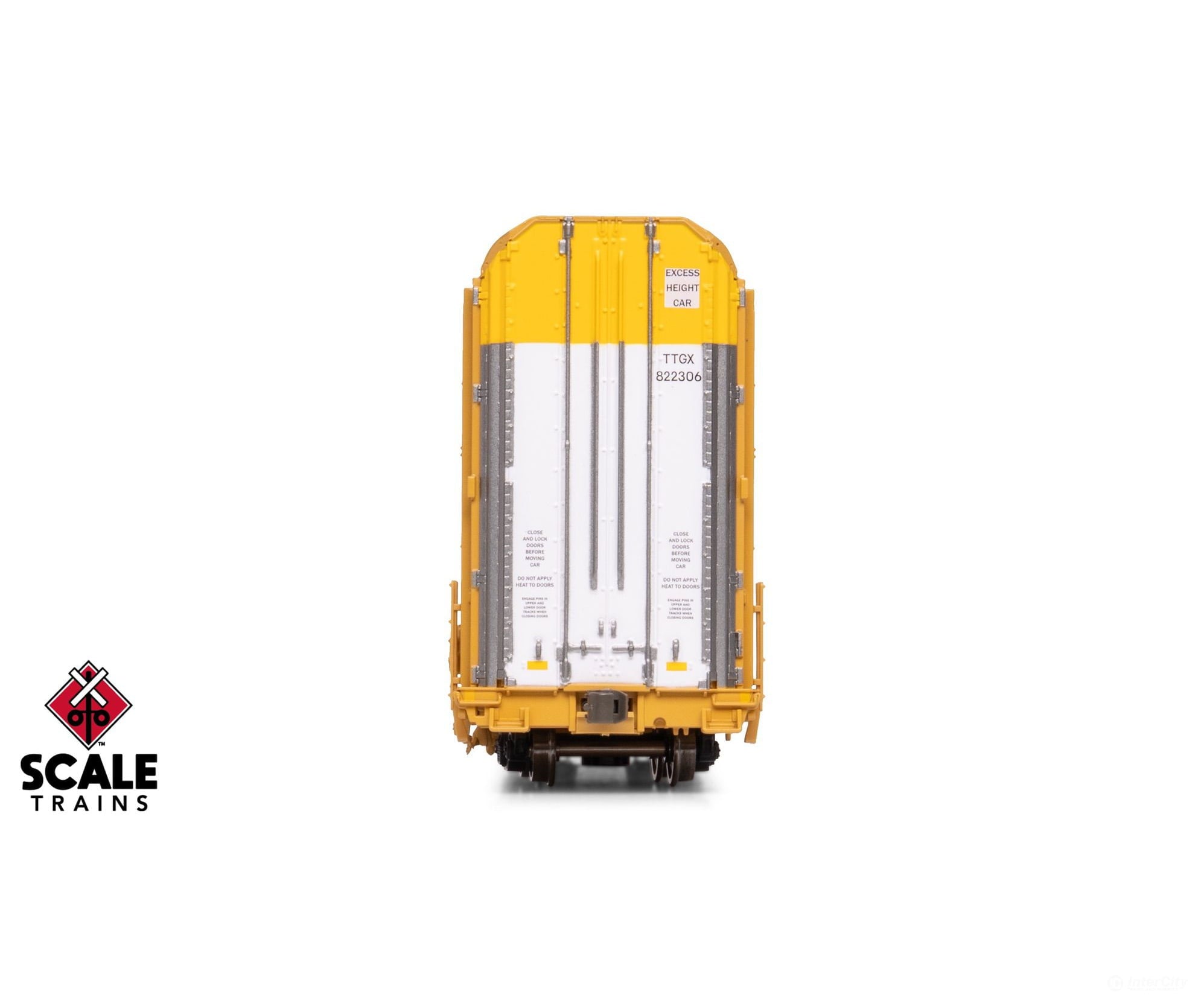
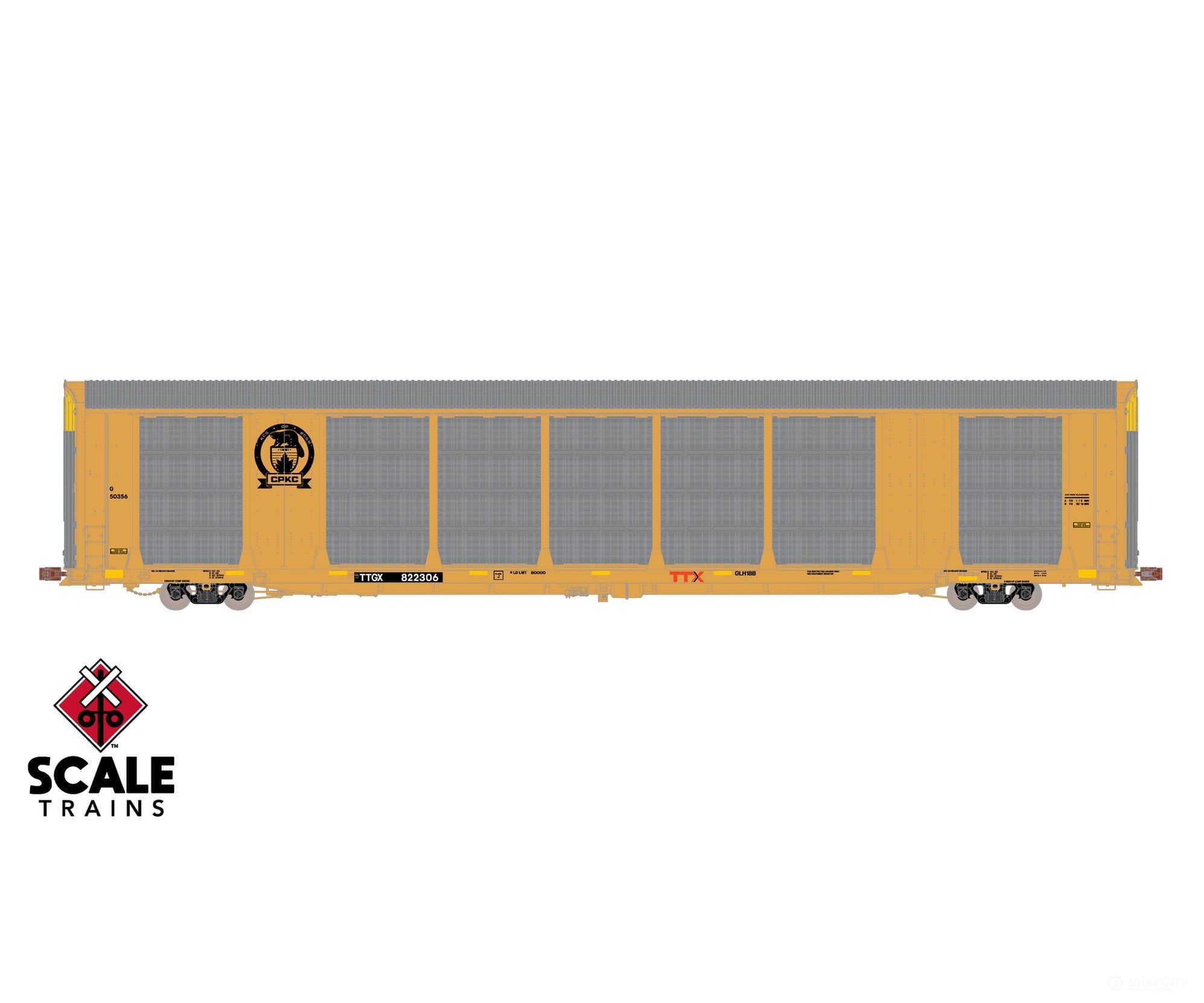
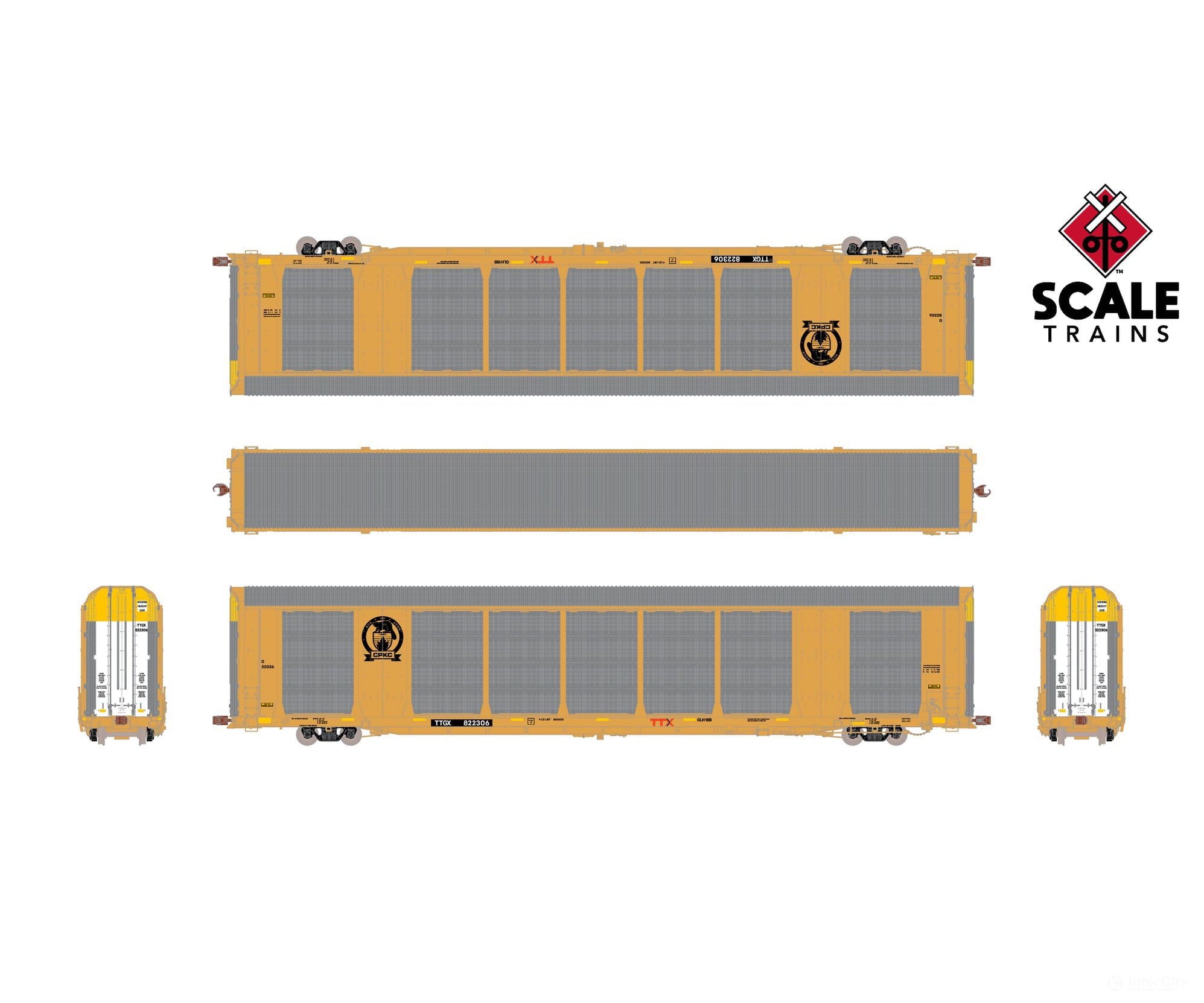
Operator™ HO Scale Gunderson Multi-Max Autoracks are built for modelers who enjoy running high-quality, realistic trains at an affordable price. Designed from builder's drawings and photographs, Operator models have fewer factory-applied parts and simplified printing to keep them budget-friendly.
Prototype Specific ScaleTrains
- New roadname
- Era: 2023 to present
- Series 822277 to 822624 (?); built 11/23
- Fully-assembled
- Multiple road numbers Car rack numbers and AAR rack clearance data is specific to each road number
- FRA-224 conspicuity striping
- Late body type
- Molded-on grab irons
- 14 finely molded corrugated side panels
- Upper side panel mounting with three outside mounting tabs and no strip
- Lower side panel mounting with four lower recessed tabs and ¾ width strip
- Three main bodies of rack mounting holes in painted side panels
- Late end doors with “zig-zag” angle panels
- Molded-on end sill steps
- Low mounted side ladders
- Outside side sill brake cylinder and brake beam mounting brackets
- Outside side sill brake rod support brackets
- Simplified underbody brake rigging details with separate brake cylinder/slack adjuster assembly, air reservoir, and control valve
- Semi-scale coupler boxes
- Body-mounted semi-scale Type E knuckle couplers
- Highly-detailed ASF Low deck swing motion trucks with finely rendered raised foundry data
- 28” machined metal wheels with accurately profiled .110” wide wheel tread
- Operates on Code 70, 83 and 100 rail
- Simplified printing and lettering legible even under magnification
- Separate brake Cylinder / slack adjuster assembly, Air reservoir and control valve
- Weighted to Industry standards for reliable operation
- Packaging safely stores model
- Minimum radius 24”
- Recommended radius 26”
Since the development of the automobile, automakers and railroads have collaborated to create better and more efficient methods for transporting new vehicles. Shipping via rail has offered automakers a fast, cost-effective method of moving new autos from manufacturing centers to distribution centers or, in the early days, directly to dealers. Initially, double-door boxcars were used for shipment; cars were simply driven aboard, with the larger opening of the double doors facilitating this process. Over time, flatcars equipped with multi-level open-air racks for handling autos were developed. Due to their relatively light weight, long flats of up to 89 feet in length were adapted to use multi-level racks, known as “autoracks,” capable of hauling over a dozen new autos.
While initially successful, by the late 1960s, the new vehicles shipped via racks became tempting targets for vandals, who used the windows on new vehicles for target practice with rocks or other projectiles. Thieves also took a toll, breaking into new automobiles to steal high-value components like stereos or hubcaps. Even train-hopping transients posed a problem, finding riding in a new automobile more comfortable than a dirty boxcar or gondola. In response, railroads and car builders added metal screens or fiberglass panels to the sides of the autoracks to shield the new vehicles from wayward projectiles.
Despite the side screens or panels protecting the window glass, the open ends of the autoracks still allowed easy access for thieves or transients. This led to the development of fully enclosed autoracks in the 1970s. The new design included perforated galvanized-steel panels on the sides, a galvanized steel roof to protect cars on the top level, and large sliding or folding doors on the ends to keep unwanted passengers out.
While effective, there was always room for improvement. With many racks built in the 60s and 70s nearing the end of their operational lives, Gunderson introduced a new design in 2013 to provide enhanced protection for automobiles and greater operational flexibility. The new design, dubbed “Multi-Max,” addressed challenges faced by railroads and shippers in the 21st century. While traditional enclosed autoracks protected new autos from vandal projectiles, a new form of vandalism, graffiti, became prevalent in the late 90s. Spray-can vandalism could pass through the perforations in the autorack side panels and ruin the new autos' finish. However, the perforations were necessary to allow light for workers loading or unloading the cars and to ventilate automobile exhaust. Multi-Max features smaller, fewer, and more widely spaced perforations in its side panels, reducing the chance of paint spray passing through.
Another innovative feature of the Multi-Max design is its adjustable number of decks. “Bi-level” autoracks are intended for taller vehicles, such as SUVs or vans, while “tri-level” autoracks, with an additional deck, handle shorter standard or compact autos in the same space. Traditionally, railroads would order bi- or tri-level racks based on anticipated traffic from manufacturing plants. If a plant shifted production from one vehicle type to another, it could result in a surplus of a car type unsuitable for the new traffic. Multi-Max allows railroad car shops to change the car configuration from bi-level to tri-level, or vice-versa, as traffic patterns dictate.
As of this writing, the Gunderson Multi-Max has proven to be an extremely popular design, with thousands built to date for nearly all Class One railroads. In a welcome departure from recent practice, many of these cars feature colorful schemes with large logos, making them stand out in a train alongside older autorack designs. With its popularity with shippers and the number built to date, the Gunderson Multi-Max appears poised to become the premier autorack design of the 2000s.


